Celebrity Net Worth
Ximena Saenz Nudes Search and Net Worth: What Is Actually Known?

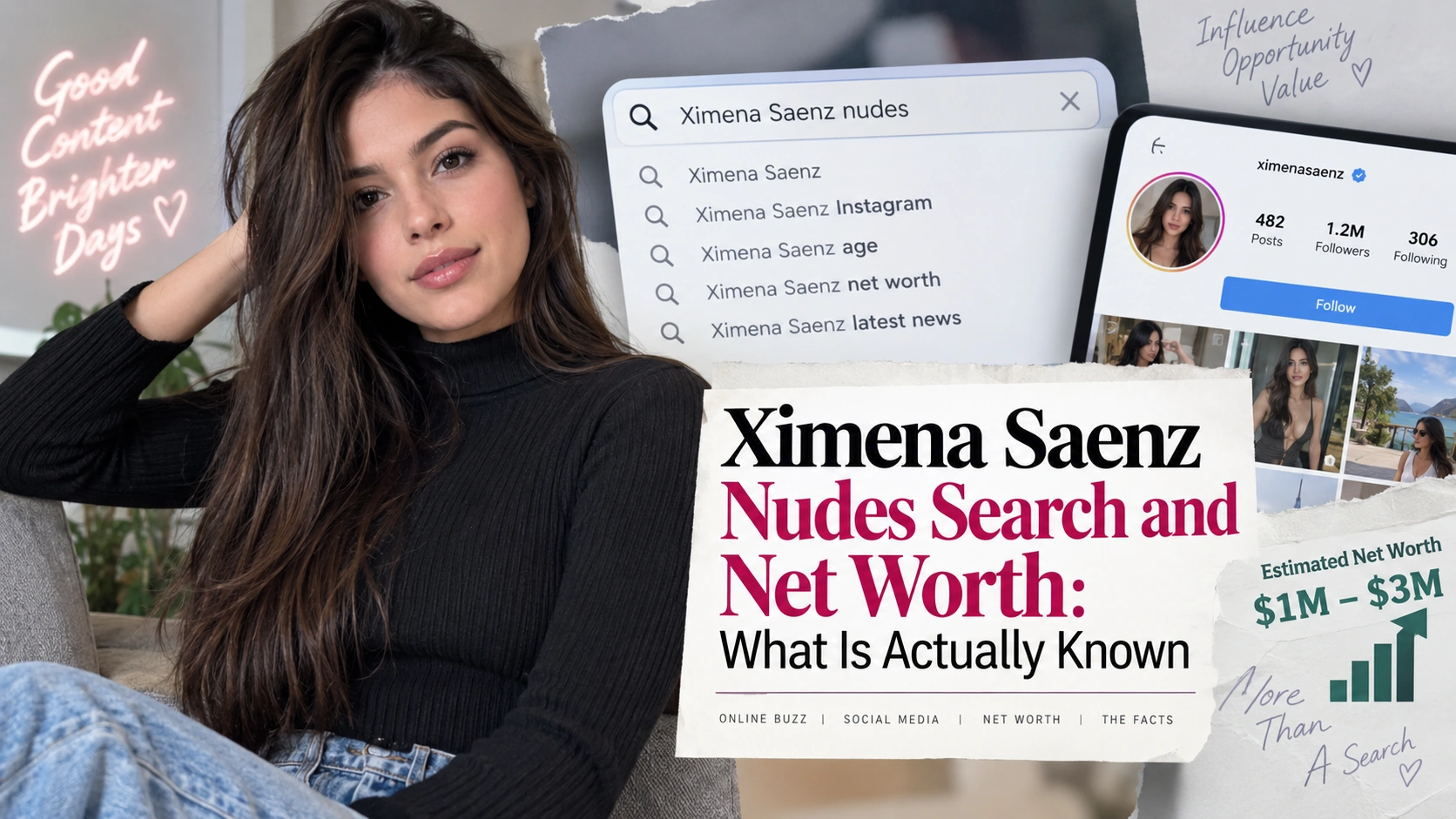
approach the “Ximena Saenz nudes” search as a verification and privacy question rather than an invitation to circulate supposedly private images. When a person’s name becomes connected to words such as “nudes,” “leaked,” or “private photos,” search results can quickly mix legitimate biography pages, impersonation accounts, clickbait websites, altered pictures, artificial intelligence generated content, and unsupported rumors. My aim here is to separate what we can verify about Ximena Saenz from what search-result headlines merely claim.
There is also another reason accuracy matters with this particular name. At least two public figures named Ximena Saenz appear prominently online. One is the Argentine chef and television personality Ximena Sáenz. The other is Ximena Alejandra Villanueva Saenz, a Mexican-born social media creator, model, and actress based in Miami. The search phrase discussed in this article appears to relate to the younger online creator, so that is the person I focus on here. Her official website describes her as a content creator, model, and actress who was born in Guadalajara, Mexico, later moved to the United States, and began creating content full time in 2021.
I will not link readers to alleged nude galleries, leak archives, mirrors, or unauthorized intimate material. Instead, I want to answer the questions behind the search: Who is Ximena Saenz? What is actually known about her career? What is Ximena Saenz’s net worth? How reliable are online wealth estimates? Why do intimate-content keywords appear around influencers? How can readers recognize fake leak pages? And what options exist when someone’s identity is falsely connected to sexual content?
Key Takeaways About Ximena Saenz Nudes Searches and Net Worth
The biggest lesson from my research is that search visibility and verified fact are two very different things. A keyword can attract substantial interest without proving that the assumption inside the keyword is true.
Here are the most important points:
- The creator discussed here is Ximena Alejandra Villanueva Saenz, not the Argentine chef with the same name. Her official site identifies her as a Mexican-born, Miami-based content creator, model, and actress.
- Her public link hub connects to multiple social platforms and describes a large overall online audience.
- Searching “Ximena Saenz nudes” does not establish that authentic leaked imagery exists.
- I found no audited or officially disclosed Ximena Saenz net worth figure.
- Several secondary biography sources place her estimated net worth somewhere between $100,000 and $1 million, but that range should be treated as speculative rather than verified.
- Influencer-income analytics can estimate potential earnings, but those calculations do not reveal private assets, debts, taxes, expenses, or actual net worth.
- Google currently accepts removal requests for both real and fake sexual imagery involving an identifiable person.
- The FTC recognizes AI-generated and digitally altered intimate images as forms of image-based abuse when they are created or shared without permission.
- Covered platforms in the United States have removal obligations under the TAKE IT DOWN Act following a valid request.
- Visitors should be cautious around websites that require unfamiliar downloads, financial information, browser notifications, or third-party logins to reveal supposedly leaked material.
From my perspective, the safest approach is to verify public facts through dependable sources while treating private-content allegations with skepticism.
Check Out: Izzyluvsuu Nude Search, Net Worth, Privacy, and What Can Actually Be Verified
Who Is Ximena Saenz?
Ximena Saenz is an online content creator whose full name is presented on her official website as Ximena Alejandra Villanueva Saenz. The site describes her as a content creator, model, and actress based in Miami, Florida. It also states that she was born in Guadalajara, Mexico, moved to the United States, and shifted into full-time content creation in 2021.
Her official website links to multiple social accounts, while a verified LinkMe profile associated with Ximena Saenz lists Instagram, TikTok, YouTube, Snapchat, Kick, and other creator platforms. The LinkMe profile displayed a combined audience figure of 10.6 million followers when recently crawled. Because follower counts can change frequently, I would treat that number as a snapshot rather than a permanent statistic.
A Linktree profile associated with Ximena Saenz also links followers to several TikTok accounts, Instagram, Patreon, and other creator channels. Its account information states that the Linktree profile was created in December 2021.
Secondary biographical coverage has described her as a Mexican-American TikTok and social-media personality who gained attention through short-form content. One 2024 profile listed her birth name as Ximena Villanueva and reported that she began posting to TikTok in 2021.
I consider her own website the stronger source when the two types of source overlap. Creator biography websites frequently copy details from one another, while an official creator website provides a more direct basis for basic professional identification.
Do Not Confuse the Influencer With Chef Ximena Sáenz
This is one of the biggest factual traps around the name.
Argentina also has a prominent chef named Ximena Sáenz. She was born in Buenos Aires, studied image and sound design and gastronomy, became closely associated with the television program Cocineros Argentinos, operates Casa Sáenz, and has published food-related work. LA NACION identifies the chef as a restaurant owner and longtime television cooking personality.
That is a completely different career profile from the younger Ximena Saenz whose official website describes her as a Miami-based creator and model.
The distinction also matters financially. Search results for “Ximena Saenz net worth” frequently surface pages about the Argentine chef. One CelebsMoney result, for example, estimates the chef’s wealth at $100,000 to $1 million and clearly describes the subject as someone born in Buenos Aires in 1983 whose wealth comes from being a chef.
Using that estimate for the influencer would therefore be a basic identity error.
Whenever I research a person who shares a name with another public figure, I check profession, social handle, location, and source biography before transferring any statistic from one page to another.
Ximena Saenz Net Worth: What Is the Best Available Estimate?
There is no publicly verified Ximena Saenz net worth figure that I could substantiate through audited financial records, an official wealth disclosure, corporate filings, or a direct financial statement from the creator.
Several secondary biography websites nevertheless publish estimates.
A 2024 Legit.ng profile states that an outside net-worth source estimated the influencer’s wealth at somewhere between $100,000 and $1 million. Another biography article similarly lists a $100,000 to $1 million range.
I would therefore summarize the situation this way:
Estimated Ximena Saenz net worth: approximately $100,000 to $1 million according to secondary online estimates, but no exact figure is publicly verified.
That qualification matters more than the number.
A million-dollar range is extremely broad. It tells us that outside publishers believe the creator may have accumulated meaningful income, but it does not demonstrate whether her actual net worth is $150,000, $600,000, $1 million, or something outside that range.
Ximena Saenz Celebrity Net Worth at a Glance
The table below separates what is documented from what is merely estimated.
| Financial Question | Best Available Answer | Reliability |
|---|---|---|
| Is there an official Ximena Saenz net worth disclosure? | No public audited figure found | High confidence |
| Common secondary estimate | $100,000 to $1 million | Speculative |
| Is the estimate confirmed by Ximena Saenz? | No confirmation found | High confidence |
| Does she have a large online audience? | Yes, public profiles show a substantial multi-platform following | Strong |
| Can creator platforms generate income? | Yes | Strong |
| Does estimated creator income equal net worth? | No | Strong |
| Can the Argentine chef’s net worth be applied to the influencer? | No | Strong |
| Should a precise seven-figure claim be presented as fact? | Not without better evidence | Strong |
The main takeaway is that “celebrity net worth” articles often create an illusion of precision. In reality, private individuals rarely disclose enough financial data for outsiders to calculate wealth accurately.
Why Ximena Saenz Net Worth Estimates Vary So Widely
Net worth is calculated by subtracting liabilities from assets.
Assets may include:
- Cash
- Investments
- Real estate
- Business ownership
- Intellectual property
- Vehicles
- Other valuable property
Liabilities may include:
- Mortgages
- Personal loans
- Business debt
- Credit balances
- Taxes owed
- Other financial obligations
An outsider usually knows almost none of these details.
Suppose, as a hypothetical example, an influencer earns $400,000 in gross revenue during a year. That number alone tells us very little about net worth. The creator might pay management fees, production staff, editors, travel expenses, platform commissions, contractors, taxes, equipment expenses, and living costs. Someone could generate high annual revenue while retaining a much smaller amount.
The opposite can also occur. A creator with comparatively modest annual income may have built significant investments over several years.
That is why I distinguish between estimated earning power and net worth.
What Creator Analytics Suggest About Ximena Saenz’s Earning Potential
One influencer analytics platform, Hafi, estimates potential income for the Instagram account @ximena.saenzz using audience size, engagement, viewership, and other metrics. The service estimated annual earnings above $1 million across possible revenue streams in one recent model. However, Hafi itself clearly warns that these figures are produced by a proprietary algorithm and are not verified by the creator.
That disclaimer is critical.
Estimated earnings are not equivalent to cash actually received. They may assume sponsorship rates, advertising potential, audience monetization, or platform performance that does not match real contracts.
More importantly, annual income does not equal wealth.
If an analytics tool estimates $1 million in yearly creator income, it would be incorrect to write “Ximena Saenz has a $1 million net worth” without knowing her expenses, assets, debt, taxes, and accumulated savings.
I therefore see the analytics figure as evidence that her audience may have meaningful commercial value, not as proof of her personal fortune.
How Ximena Saenz May Earn Money as a Creator
Her public profiles show activity across several creator platforms, which creates multiple possible monetization routes.
Creators with multi-platform audiences can potentially generate income through:
- Brand sponsorships
- Social-media advertising
- Platform creator programs
- Subscription content
- Fan memberships
- Affiliate marketing
- Paid appearances
- Livestreaming
- Donations or tips
- Merchandise
- Modeling work
- Acting opportunities
- Licensing
- Cross-platform promotional campaigns
I use the word “potentially” deliberately. The existence of a platform link does not reveal how much money that platform produces.
A creator can maintain a presence on ten platforms while receiving most of her income from only one or two.
Private sponsorship agreements create another obstacle to accurate estimates. Brand deals can differ according to campaign duration, platform, audience geography, exclusivity, engagement, licensing rights, paid amplification, and whether the creator must produce one post or an entire campaign.
Without contract details, any exact annual-income claim remains an estimate.
Revenue, Earnings, and Net Worth Are Different
Readers comparing celebrity finance articles should keep these concepts separate.
| Term | Basic Meaning | Why It Matters for Ximena Saenz |
|---|---|---|
| Revenue | Money generated before expenses | Could include gross creator or business receipts |
| Earnings | Income attributed to work or business activity | May still be before some taxes or personal costs |
| Profit | Revenue after business expenses | More useful than gross revenue, but still not net worth |
| Assets | Things a person owns that have economic value | Needed to estimate net worth |
| Liabilities | Debts and financial obligations | Must be subtracted from assets |
| Net worth | Assets minus liabilities | Cannot be reliably calculated from follower counts |
In my view, this is why a responsible article should present the $100,000 to $1 million range as an unofficial estimate rather than a confirmed financial fact.
What Does the “Ximena Saenz Nudes” Keyword Actually Prove?
Very little beyond search intent.
A keyword tells us what people type into a search engine. It does not independently verify the premise contained in that phrase.
People may search “Ximena Saenz nudes” because they saw a rumor, encountered a suspicious page, noticed a suggested search, saw a social-media comment, or simply became curious.
Publishers can also create pages specifically because a phrase attracts clicks.
For example, imagine a hypothetical website detects growing search interest in “Creator X leaked.” The site publishes a page with a provocative headline but offers no independent evidence. Other automated sites scrape the same phrase. Search engines then index those pages.
A reader may see twenty results and conclude that twenty sources confirmed the story.
In reality, all twenty pages could trace back to one unsupported claim.
That is why I never use result count as proof.
Search Results Are Not Evidence That Ximena Saenz Nudes Exist
Google’s own removal policy illustrates why sexual search associations must be handled carefully.
Google says people can request removal when sexual imagery involving them is real or fake. The policy also covers pages that wrongly associate someone’s name, alias, or handle with sexual content.
Google states:
“Whether the content is fake or real, you can request” removal from search results.
That matters because it confirms that a person’s appearance alongside explicit search terms does not necessarily reflect authentic material.
An image can be fabricated.
A name can be attached to an unrelated pornographic page.
A public photograph can be reused as a thumbnail beside a misleading headline.
A person’s likeness can also be manipulated using AI.
For those reasons, I would not claim that authentic “Ximena Saenz nudes” exist merely because websites use that wording.
AI Makes Fake Nude Claims Harder to Evaluate
Artificial intelligence has dramatically increased the difficulty of visual verification.
Google specifically identifies fake pornography, fake nude photographs, and deepfakes as examples of fabricated sexual material eligible for its personal-content removal process under certain conditions.
The FTC likewise defines image-based abuse to include intimate imagery that is real, digitally altered, or created as an AI deepfake when it is produced, shared, or threatened without permission.
That means “it looks real” is no longer a strong authentication method.
A manipulated image can retain a real person’s face while fabricating the body, setting, activity, clothing state, or surrounding context.
Even low-quality fake images can spread widely once screenshots detach them from the original source.
From my perspective, uncertainty should make people less willing to share intimate imagery, not more willing.
Why Fake Ximena Saenz Leak Pages Can Be Dangerous
Someone searching for celebrity or influencer leaks can become a target too.
Provocative pages have a strong psychological advantage because visitors are already curious and may click quickly without evaluating what the website is asking them to do.
Several patterns deserve special caution.
Suspicious Downloads
A page may claim visitors need a special video player, mobile application, browser extension, ZIP file, or APK before they can see the promised material.
An ordinary website should not require unfamiliar software simply to display a photograph or video.
Installing unknown files can expose a device to unwanted software or malware.
Fake Age Verification
Some websites request credit-card details supposedly to confirm that the visitor is an adult.
I would not provide financial details simply because a page promises that verification is “free.”
A payment form creates risks ranging from unwanted subscriptions to outright financial fraud.
Phishing Logins
A supposed leak page may display a login screen designed to resemble Instagram, Google, TikTok, X, or another familiar service.
The safer approach is to close the page and independently navigate to the genuine platform.
Entering real credentials into a copied login page can allow attackers to steal an account.
Notification Permission Traps
Websites sometimes tell visitors to click “Allow” to prove they are human or unlock a video.
Browser notification permission does not prove age or identity.
Giving a suspicious website permission can lead to repeated spam, fake security alerts, or deceptive advertising.
Red Flags Around Alleged Ximena Saenz Leaks
I use this checklist when evaluating a sensational result.
| Red Flag | Possible Risk | Better Response |
|---|---|---|
| Requires an app download | Malware or unwanted software | Leave the page |
| Credit card needed for “free access” | Fraud or recurring billing | Do not enter payment information |
| Redirects through several domains | Aggressive monetization or deception | Close the site |
| Fake virus warning | Social engineering | Ignore the warning and exit |
| Requests social login credentials | Phishing | Visit the real platform separately |
| Tiny blurred preview presented as proof | Clickbait | Do not assume authenticity |
| Countdown timer | Artificial urgency | Ignore it |
| Cryptocurrency or gift-card demand | Difficult-to-reverse payment | Do not pay |
| Notification access required | Persistent spam | Deny permission |
| No identifiable publisher | Low accountability | Treat claims skeptically |
| Sensational headline with no original source | Unsupported rumor | Look for credible evidence |
The common pattern is pressure.
A trustworthy source should not need to rush visitors into downloads, payments, permissions, or account logins.
Why Reposting Alleged Nude Images Can Cause Real Harm
A common argument says that once an image is online, sharing it again does not matter.
I do not think that holds up.
Every repost can:
- Create another copy
- Produce another searchable URL
- Increase the audience
- Generate screenshots
- Encourage additional reuploads
- Strengthen a false association between a name and explicit material
- Make removal more difficult
The harm can exist even when an image is fake.
A manipulated sexual image may depict an event that never happened, yet viewers can still associate that image with the real person.
Search engines may later connect the person’s name with pages hosting the fabrication.
The FTC’s definition of image-based abuse recognizes exactly this problem by including digitally altered and AI-generated intimate imagery.
How I Would Verify a Ximena Saenz Nudes Claim Without Invading Privacy
Verification does not require downloading disputed intimate material.
I would use a source-based process instead.
First, identify the earliest traceable claim. Determine whether it came from an established publisher, the person’s verified public presence, or an anonymous account.
Second, check whether independent reliable sources confirm what happened.
Third, examine whether supposedly supporting websites provide original evidence or simply repeat each other’s wording.
Fourth, consider whether the images used in thumbnails are ordinary public photographs placed beside provocative headlines.
Fifth, assess the financial incentives of the publisher. A page filled with ads, pop-ups, redirects, subscriptions, and downloads benefits financially from curiosity.
Sixth, avoid downloading intimate files for inspection.
If the only evidence comes from sites whose business model depends on convincing people that a leak exists, I would treat the claim as unverified.
What Google Allows People to Remove From Search
Google’s current personal-content policies provide removal options for several categories relevant to this type of search.
They include:
- Genuine sexual imagery involving the requester
- Fake nude or sexual imagery
- AI-generated explicit content
- Pages falsely associating someone’s name or handle with pornographic material
- Certain nonconsensual personal sexual content
Google also provides an image-search reporting flow through which signed-in users can identify an image as a sexual image of themselves and indicate whether it is real or AI-generated.
This is useful, but one limitation is important.
Removing something from Google Search does not automatically delete it from the website hosting the file.
Search visibility and original hosting are separate layers.
What the FTC Says About Image-Based Abuse
The Federal Trade Commission describes image-based abuse as creating, sharing, or threatening to share someone’s intimate imagery without permission. Its guidance explicitly includes real photos, digitally altered images, and AI deepfakes.
The FTC gives one especially practical instruction:
“Only platforms can take down intimate photos and videos shared without your consent.”
I think this is one of the most useful distinctions for anyone dealing with unwanted sexual content.
Search engines can reduce discoverability.
The website or platform hosting the material controls the original upload.
In many cases, both systems must be addressed.
The TAKE IT DOWN Act and Current U.S. Removal Rules
The United States strengthened its response to nonconsensual intimate imagery in 2026.
The FTC began enforcing Section 3 of the TAKE IT DOWN Act on May 19, 2026. According to the agency, covered platforms must provide a process through which people can request removal of intimate images shared without consent. Following a valid request, covered platforms must remove qualifying imagery and known identical copies within 48 hours.
FTC guidance also makes clear that the framework includes AI-generated intimate imagery in relevant circumstances.
The agency sent warning letters on May 20, 2026 to websites offering so-called “nudify” technology, emphasizing that covered platforms have obligations under the law.
These rules are particularly relevant to the broader issue behind keywords such as “Ximena Saenz nudes” because modern sexual-image abuse is no longer limited to stolen photographs. Fabricated material can create similar reputational and personal harm.
What Someone Should Do If Their Likeness Is Misused
If a person finds real or fake sexual imagery involving their own likeness, I would focus on documentation and removal.
Record the Location
Save enough information to identify the content later.
Useful details may include:
- Page URL
- Platform name
- Account username
- Date discovered
- Relevant messages
- Screenshots showing context
- Report confirmation numbers
Avoid creating unnecessary extra copies of intimate material while preserving evidence.
Report the Hosting Platform
Use the website or app’s intimate-image, harassment, impersonation, or privacy reporting process.
In the United States, covered platforms subject to the TAKE IT DOWN Act must provide an eligible removal process.
Request Search Removal
If the content appears in Google results, an eligible subject or representative can submit a personal-content removal request. Google’s policies apply globally to qualifying Search removals.
Escalate When a Platform Fails to Respond
The FTC launched a reporting mechanism for complaints involving platforms that fail to comply with valid TAKE IT DOWN requests.
Legal remedies vary by country, so people outside the United States should check local privacy, harassment, and intimate-image laws as well.
Common Misconceptions About Ximena Saenz Nudes Searches
If Many People Search for It, the Content Must Be Real
No. Search volume measures curiosity, not authenticity.
A rumor can become popular precisely because people are uncertain whether it is true.
If Google Shows a Page, Google Verified the Claim
No.
Google indexes webpages. A result appearing in Search is not an authentication certificate for the claims on that page.
If a Nude Image Looks Convincing, It Must Be Genuine
No longer.
AI and digital image manipulation can create highly persuasive fake sexual imagery.
Google and the FTC both explicitly recognize this category.
If the Image Is Fake, Sharing It Is Harmless
No.
A fake sexual image can still harm the real person whose likeness is used.
If a Page Says “Leaked,” It Must Have Private Material
No.
“Leaked” is an attention-grabbing headline word that can be used whether or not authentic material exists.
If Material Is Already Online, Reposting Does Not Matter
Each new copy expands distribution and can make removal harder.
Common Misconceptions About Ximena Saenz Celebrity Net Worth
The $100,000 to $1 Million Range Is Confirmed
It is not.
That range appears in secondary biographical sources, not audited financial reporting.
A Million Dollars of Estimated Annual Earnings Means a Million-Dollar Net Worth
No.
An earnings analytics service may estimate revenue potential, but revenue is not net worth.
Follower Count Reveals Wealth
Followers can influence business opportunities, but they cannot reveal assets and liabilities.
Every Net-Worth Page Refers to the Same Ximena Saenz
Definitely not.
Some highly ranked net-worth results refer to the Argentine television chef, not the younger social-media creator.
Public Lifestyle Photos Reveal Financial Status
They do not.
A visible trip, outfit, vehicle, or property may be purchased, rented, borrowed, sponsored, financed, or part of a commercial partnership.
Social media is not a balance sheet.
My Assessment of Ximena Saenz’s Net Worth
Based on the available evidence, I would list Ximena Saenz’s net worth as unverified, with secondary estimates generally placing it between $100,000 and $1 million.
I would not narrow that range further.
The creator’s large online audience and multi-platform presence indicate significant monetization potential. Her verified LinkMe page displayed a combined following above 10 million when crawled, and her official site positions her professionally across content creation, modeling, and acting.
Those facts make commercial success plausible.
They still do not reveal private wealth.
A precise claim such as $750,000 or $2 million would require evidence that current public sources do not provide.
Why Responsible Coverage of the Ximena Saenz Nudes Keyword Matters
I think publishers can answer provocative search queries without becoming part of the exploitation those queries may represent.
A useful page does not need to provide stolen images or sensational rumors.
It can explain:
- Who the person actually is
- Which similarly named public figures should not be confused
- What public career information can be verified
- What net-worth estimates exist
- Why those estimates are uncertain
- Why sexual search associations do not prove authenticity
- How AI-generated images complicate verification
- How visitors can avoid scam pages
- What removal options exist for affected individuals
That approach answers informational intent while protecting readers from misinformation and unsafe websites.
It also ages better.
A rumor can disappear next month, but guidance about verification, privacy, creator finances, impersonation, and digital safety remains useful.
Conclusion
I believe the most responsible way to understand the “Ximena Saenz nudes” keyword is to separate searchable claims from documented facts. Ximena Alejandra Villanueva Saenz is publicly presented through her own website as a Mexican-born, Miami-based content creator, model, and actress who moved into full-time content creation in 2021. Her online reach is substantial, but neither follower numbers nor creator analytics prove what her personal finances look like.
For Ximena Saenz net worth, the most commonly repeated secondary estimate I found is approximately $100,000 to $1 million. I would treat that range as speculative because there is no audited financial disclosure supporting an exact figure.
Likewise, the existence of pages targeting intimate-content searches does not prove authentic leaked imagery exists. Google and the FTC both recognize that sexual imagery can be fabricated, manipulated, or falsely associated with an identifiable person.
My recommendation is simple: verify public facts, avoid suspicious leak sites, do not redistribute uncertain intimate imagery, and treat both nude claims and celebrity net-worth numbers with appropriate skepticism.
Frequently Asked Questions
Are Ximena Saenz Nudes Real?
The “Ximena Saenz nudes” keyword does not prove that authentic leaked images exist. Search results can be created around rumors, clickbait, AI-generated imagery, edited photographs, or false associations. Google specifically provides removal mechanisms for fake sexual or nude content that uses an identifiable person’s likeness, which demonstrates why visual material should not automatically be treated as genuine. I would avoid downloading or redistributing purported intimate images and instead evaluate whether credible independent evidence exists.
What Is Ximena Saenz’s Net Worth?
Ximena Saenz’s exact net worth is not publicly verified. Secondary biography sources commonly place the social-media creator’s estimated wealth somewhere between $100,000 and $1 million, but that figure is not supported by audited financial records or an official disclosure from Saenz. Her substantial online audience may create significant earning opportunities, but income potential cannot reveal assets, debts, taxes, expenses, investments, or actual personal wealth.
What Is Ximena Saenz’s Celebrity Net Worth in 2026?
A reasonable summary for 2026 is that Ximena Saenz has an estimated net worth of $100,000 to $1 million according to secondary online sources, with no exact verified figure available. Some analytics platforms estimate substantial annual creator earnings, but those systems explicitly acknowledge that their numbers are algorithmic and unverified. I therefore would not present a more precise number as fact.
Who Is Ximena Saenz?
Ximena Alejandra Villanueva Saenz is a content creator, model, and actress based in Miami, according to her official website. The site says she was born in Guadalajara, Mexico, moved to the United States, and began pursuing content creation full time in 2021. She maintains a public presence across multiple social-media and creator platforms. She should not be confused with the Argentine chef Ximena Sáenz.
Is Ximena Saenz the Argentine Chef?
No. Two public figures with very similar names appear prominently online. The influencer discussed here is Ximena Alejandra Villanueva Saenz, a Mexican-born creator based in Miami. The Argentine Ximena Sáenz is a chef, television personality, author, and restaurateur associated with Cocineros Argentinos and Casa Sáenz. Mixing the two identities can produce incorrect biographies and especially misleading net-worth claims.
Can AI Generate Fake Ximena Saenz Nude Images?
Yes, modern artificial intelligence and image-editing tools can fabricate sexual imagery involving recognizable real people. Google explicitly categorizes deepfakes and fake nude photographs as fabricated sexual content, while the FTC includes AI-generated deepfakes in its image-based abuse guidance. A realistic-looking image therefore does not establish that the depicted event occurred or that the person consented to the creation or distribution of the image.
Can Google Remove Fake Nude Images From Search?
Google allows eligible people or representatives to request removal of both genuine and fabricated sexual imagery involving them. Its policies cover fake nude photographs, deepfakes, and some situations where a person’s name or handle is wrongly associated with sexual websites. Search removal does not necessarily delete the original content from the website hosting it, so the hosting platform may need to be contacted separately.
What Should I Do If a Leak Website Asks Me to Download an App?
I would leave the website. A suspicious page should not require an unfamiliar application, APK, executable program, browser extension, or archive before it can supposedly display ordinary online content. The same caution applies to pages demanding credit-card details, cryptocurrency, social-media passwords, or browser notification access. Such requirements may be designed to monetize curiosity or compromise personal information rather than provide what the page claims.
Why Do Celebrity Net Worth Estimates Differ So Much?
Celebrity net-worth estimates differ because publishers rarely have access to complete financial information. An accurate net-worth calculation requires assets and liabilities, while most websites only see follower counts, possible sponsorship activity, public businesses, estimated advertising revenue, and other indirect signals. In Ximena Saenz’s case, creator analytics may indicate strong earning potential, but those models cannot confirm actual wealth.
Sources
Ximena Saenz Official Website, current creator biography and linked public platforms.
Verified Ximena Saenz LinkMe profile, current creator links and combined audience snapshot.
Legit.ng, “Who is Ximena Saenz? All about the rising TikTok star,” updated November 2024.
Briefly, biography and estimated net-worth profile for social-media personality Ximena Saenz.
Hafi, estimated earnings analytics for @ximena.saenzz, with its stated methodology and unverified-estimate disclaimer.
LA NACION, profile of Argentine chef Ximena Sáenz, used to distinguish her from the social-media creator.
Google Search Help, current personal sexual-content removal policies and fake-image guidance.
Federal Trade Commission, “Image-Based Abuse: What To Know and Do,” May 2026.
Federal Trade Commission, “FTC Begins Enforcing the TAKE IT DOWN Act,” May 19, 2026.
Federal Trade Commission, TAKE IT DOWN Act compliance and warning-letter materials, May 2026.
Disclaimer
I wrote this article for informational, biographical, financial-research, privacy, and online-safety purposes. It does not confirm that authentic nude or intimate material involving Ximena Saenz exists, that any alleged image is genuine, or that any such material was distributed with consent. I found no audited or officially confirmed Ximena Saenz net worth figure, so the $100,000 to $1 million range discussed above should be understood as an unofficial secondary estimate rather than established financial fact. Legal protections, platform procedures, and removal rights vary by country and individual circumstances. Anyone dealing with impersonation, nonconsensual intimate imagery, sextortion, or similar abuse should use appropriate platform reporting systems and seek qualified local support or legal guidance when necessary.
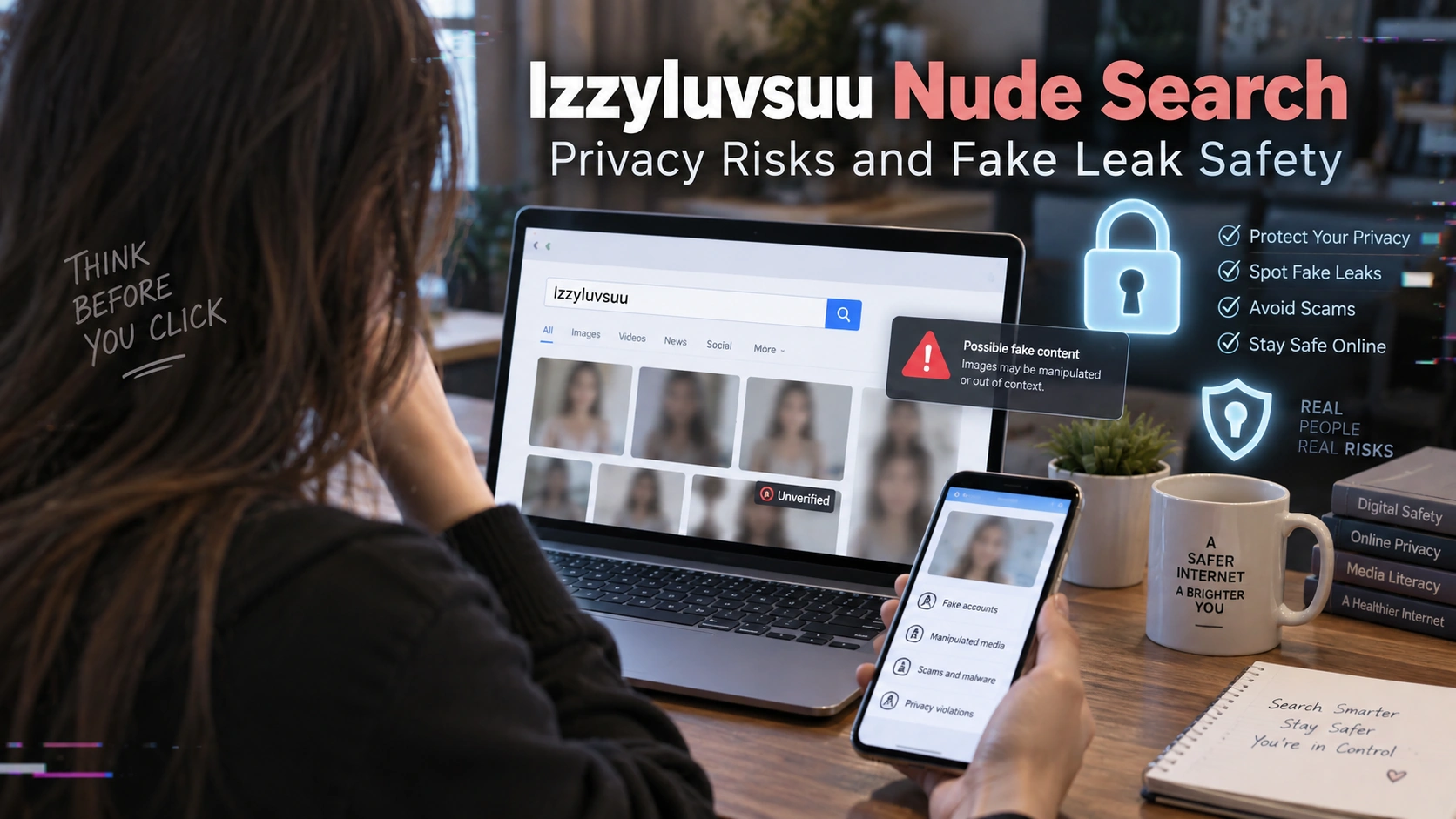
I approached the “izzyluvsuu nude” search differently from the way many low-quality pages seem to handle it. When a keyword combines an identifiable online personality with intimate terms, I do not think the responsible answer is to point readers toward supposed leaks, galleries, mirrors, or downloads. The better question is what we can actually verify about the person behind the username, whether claims appearing in search results have credible evidence behind them, what is known about Izzyluvsuu’s net worth, and why these searches can expose both the person being searched and the searcher to privacy and security risks.
There is clearly meaningful search interest around the keyword. Semrush snapshots published during 2026 estimated U.S. search volume for “izzyluvsuu nude” at around 40,500 in June and 33,100 in July. Those figures demonstrate interest in the phrase, but they do not prove that authentic intimate material exists. Search volume measures what users type into search engines. It does not authenticate the assumption contained inside a query.
I think that distinction is essential because people often treat search popularity as evidence. A keyword can become popular because of rumors, autocomplete suggestions, reposted claims, fake thumbnails, impersonation accounts, manipulated images, or websites intentionally targeting provocative search terms for traffic. None of those circumstances independently confirms that the underlying claim is true.
The same principle applies to searches for “izzyluvsuu net worth.” I could not verify an authoritative public figure for Izzyluvsuu’s wealth from a reputable financial publication, a documented business disclosure, or another source that would justify presenting a specific dollar amount as fact. Rather than invent an estimate, I will explain what is publicly discoverable, why creator net worth figures are frequently speculative, and which income sources could theoretically influence a creator’s finances without pretending to know private financial information.
Key Takeaways About Izzyluvsuu Nude Searches and Net Worth
My main conclusion is that there is a large difference between search interest and verified information. That matters for both intimate-content searches and financial searches.
The most useful points are:
- Search volume for “izzyluvsuu nude” does not prove authentic intimate material exists.
- I will not direct readers to supposedly leaked, private, or nonconsensual sexual material.
- Fake leak pages may use provocative creator names primarily to attract clicks.
- AI manipulation means a realistic-looking sexual image is no longer reliable proof of authenticity.
- Google has removal policies covering real and fabricated sexual imagery involving identifiable individuals.
- The FTC recognizes real, digitally altered, and AI-generated intimate imagery within its guidance on image-based abuse.
- I could not verify a reliable public figure for Izzyluvsuu’s net worth.
- A creator’s revenue, income, and net worth are different financial concepts.
- Social-media popularity alone does not provide enough information to calculate someone’s wealth.
- Readers should be cautious about websites that publish exact net worth figures without explaining their evidence.
- Search-result removal and deletion from the original website are separate processes.
- People dealing with unauthorized intimate imagery have official reporting and removal options.
In my view, the strongest approach is to separate what is measurable from what is assumed. Search interest is measurable. A claimed leak may not be. Public creator activity may be observable. Private bank balances are not.
Who Is Izzyluvsuu?
Public information about Izzyluvsuu is much less comprehensive than the search volume around the username might suggest.
One publicly indexed, user-generated Lemon8 post from July 2025 describes Izzyluvsuu as a Twitch streamer associated with Disney Dreamlight Valley and discusses the creator’s streaming community. Because that page is a third-party personal recommendation rather than an official biography or established media profile, I would treat it as contextual evidence rather than definitive proof of every biographical detail about the person behind the handle.
That distinction matters. Search engines often combine content from official profiles, fan posts, scraped profile pages, discussion forums, automated directories, and unrelated accounts with similar usernames. A searcher can easily end up merging information about different people.
I therefore would not confidently state a legal name, exact age, residence, educational background, relationship status, or other personal biographical information unless it can be tied to a reliable public source.
This cautious approach also helps avoid a common problem with creator biographies. Once one website publishes an unsupported detail, dozens of automated or SEO-focused sites can repeat it. Repetition can make the claim appear established even when every later page traces back to the same weak source.
Izzyluvsuu Net Worth: Is There a Verified Celebrity Net Worth Figure?
The short answer is no verified Izzyluvsuu net worth figure surfaced in my research.
I searched specifically for combinations of the username with terms such as “net worth,” “Twitch,” “streamer,” “celebrity,” and other creator-related identifiers. I did not find a reliable financial publication, public financial filing, credible interview, or established creator analytics source that provides enough evidence to state an exact net worth.
For that reason, I would not write something like “Izzyluvsuu is worth $500,000” or “Izzyluvsuu has a $1 million net worth” simply because such numbers look plausible for an internet personality. Without supporting evidence, those figures would be speculation presented as fact.
Why I Do Not Want to Invent an Izzyluvsuu Net Worth Estimate
Net worth sounds simple because it is usually presented as one number. In reality, the calculation is:
Net worth = total assets minus total liabilities
Assets can include cash, investments, business ownership, property, vehicles, valuable intellectual property, and other holdings. Liabilities can include mortgages, business debt, taxes owed, loans, credit obligations, and other financial commitments.
Most of that information is private for an online creator.
Even if we knew exactly how much a creator earned from Twitch subscriptions, advertising, sponsorships, or other platforms during one year, that still would not establish net worth. Income tells us money received during a period. Net worth measures accumulated assets after debts.
A creator earning $150,000 annually could theoretically have a lower net worth than someone earning $70,000 annually if the first person has significant expenses or debt while the second has accumulated investments and savings.
That is why I believe many celebrity net worth pages should be read as estimates rather than audited financial statements.
Check Out More about Celebrities Net Worth.
What We Can and Cannot Say About Izzyluvsuu Net Worth
The table below separates reasonable observations from unsupported assumptions.
| Net Worth Question | What Can Be Responsibly Said | Confidence |
|---|---|---|
| Is Izzyluvsuu an online creator? | Public third-party references describe the handle as a Twitch streamer | Moderate |
| Is there a verified Izzyluvsuu net worth? | I found no authoritative verified figure | High based on current research |
| Can Twitch generate creator income? | Yes, eligible creators can monetize through platform features and related opportunities | High |
| Does creator income equal net worth? | No, income and net worth measure different things | High |
| Can followers reveal exact wealth? | No | High |
| Can sponsorships contribute to income? | Potentially, but specific deals must be verified individually | High |
| Is a six-figure or seven-figure estimate confirmed? | No credible evidence found | High |
| Should random net worth blogs be treated as financial records? | No | High |
The practical takeaway is simple. “Izzyluvsuu net worth” may be a useful secondary keyword for an informational article, but the article should not manufacture an exact amount when the evidence does not support one.
How Online Creators Can Potentially Make Money
Although I cannot responsibly calculate Izzyluvsuu’s personal finances, it is useful to understand how online creators in general can build income.
Creator revenue can come from multiple channels, including:
- Streaming subscriptions
- Viewer donations or tips
- Platform advertising
- Sponsorship agreements
- Affiliate commissions
- Brand partnerships
- Merchandise
- Paid communities
- Licensing
- YouTube advertising
- Creator funds or platform incentive programs
- Appearances
- Digital products
- Gaming partnerships
The important word here is “can.” I am describing common creator-business models, not claiming that Izzyluvsuu receives income from every category.
For example, a streamer might generate some monthly subscription revenue but have no sponsorship deals. Another creator may make most of their money from sponsored posts while earning comparatively little from platform advertisements.
Private contract terms make outside estimation even harder. A sponsorship deal can depend on audience size, engagement, content category, campaign duration, usage rights, geographic reach, exclusivity, and the advertiser’s budget.
That makes an exact celebrity net worth figure impossible to infer from a username alone.
Revenue, Income, and Net Worth Are Not the Same Thing
I think this distinction deserves special attention because celebrity finance articles frequently blur the terms.
| Financial Term | What It Generally Means | Why It Matters |
|---|---|---|
| Revenue | Money generated before relevant expenses | Can make a business appear larger than its actual profit |
| Income | Earnings after certain costs, depending on the context | Still does not reveal accumulated wealth |
| Profit | Revenue minus business expenses | More informative than revenue but not the same as personal wealth |
| Assets | Things of financial value a person owns | A major component of net worth |
| Liabilities | Debts and financial obligations | Reduce net worth |
| Net worth | Assets minus liabilities | The broad measure people usually mean by “wealth” |
If a creator generates $200,000 in annual business revenue, for example, it would be incorrect to automatically say the creator’s net worth increased by $200,000. Equipment, editors, taxes, platform fees, marketing, contractors, travel, management commissions, and ordinary living expenses could substantially change the final financial picture.
This is why I prefer “not publicly verified” over a dramatic but unsupported number.
Why Is “Izzyluvsuu Nude” Such a Popular Search?
Current SEO data confirms that the query has attracted noticeable search interest.
Semrush snapshots showed U.S. volume estimates reaching tens of thousands of searches per month during parts of 2026. Again, those figures measure demand for the keyword, not truth behind the implied claim.
Several forces can increase searches for intimate-content keywords.
A social-media post may mention an alleged leak. Someone may then search the name. Search engines can begin displaying related suggestions. More users notice those suggestions and search again. SEO websites notice the volume and create pages targeting the keyword. Those pages then expose even more people to the phrase.
The result can become a feedback loop.
Imagine a hypothetical creator named “Creator A.” One anonymous account posts, “Did anyone see the Creator A leak?” No evidence is included. Five hundred people search the phrase. Search-volume tools eventually detect the interest. Dozens of sites create pages titled around “Creator A leaked.” None has independent evidence, but the number of pages makes the rumor look larger.
That example shows why quantity of search results should never be confused with quality of evidence.
Does Searching “Izzyluvsuu Nude” Prove That Nude Content Exists?
No.
I believe this is the single most important fact readers should understand.
A Google query is not a factual statement. Search engines accept whatever words a user enters. SEO tools then record those queries. Website publishers can target them whether the underlying assumption is true, false, misleading, or impossible to verify.
A search for “Person X arrested” does not prove Person X was arrested. A search for “Company X bankruptcy” does not prove the company is bankrupt. Likewise, “izzyluvsuu nude” does not prove authentic nude material involving that person exists.
Google’s own personal-content policies recognize that a person’s identity can be falsely associated with sexual material. Its documentation states that removal requests may cover fabricated sexual imagery as well as pages that wrongly associate a name, alias, handle, or image with sexual content.
From my perspective, that policy demonstrates why searchers should not assume that every sexual association appearing in Google represents a genuine event.
AI-Generated Images Have Made Verification Harder
Artificial intelligence has changed the way people should assess intimate-content claims.
Previously, many users assumed that a realistic image probably originated from a real photograph. That assumption is increasingly unreliable.
AI systems and image-editing tools can create fabricated imagery using an identifiable person’s face or likeness. Someone can also alter an ordinary photograph and place it into a completely different context.
The FTC’s current guidance explicitly includes real images, digitally altered images, and AI-generated deepfakes within its discussion of image-based abuse.
This means an image can be false while the harm surrounding it is genuine.
A fabricated sexual image can affect someone’s reputation, relationships, employment, mental wellbeing, or online identity even though the depicted event never occurred.
I therefore think the right response to uncertainty is not “share it so other people can decide.” Sharing multiplies the distribution problem.
Why Fake Leak Websites Can Be Risky for Searchers
Privacy abuse is one side of the issue. Cybersecurity is another.
People searching provocative terms are attractive targets because curiosity can make them click quickly. A page promising supposedly exclusive material can use that emotional response to push visitors into actions they would normally question.
Fake Download Buttons
A supposed video page may show multiple buttons labeled “Play,” “Download,” “Watch Full Video,” or similar phrases.
The button might not lead to the promised content at all. It could launch advertisements, repeated redirects, notification prompts, unwanted software, or deceptive landing pages.
I would never install an unfamiliar application, browser extension, APK, executable file, or ZIP archive merely because a webpage claims it is required to reveal a supposed leak.
Fake Age Verification
Some websites claim a credit card is required for free age verification.
That should immediately raise caution.
An unexpected request for payment information can expose visitors to subscription charges, fraudulent transactions, or misuse of card details. The fact that a page says “you will not be charged” is not evidence that the operator can be trusted.
Fake Login Pages
A leak page may redirect visitors to something that resembles Instagram, X, Google, Discord, or another familiar service.
If the page is not actually hosted by the genuine service, entering credentials can expose the username and password to attackers.
Password reuse increases the danger because one stolen credential can potentially unlock several accounts.
Browser Notification Traps
Another common design tells visitors to click “Allow” to prove they are human.
Browser notification access has nothing to do with proving a person’s age or humanity. Granting permission can allow a site to push persistent spam or deceptive alerts to the device.
Warning Signs to Look for Before Trusting a Page
The following table summarizes practical red flags.
| Warning Sign | What It May Indicate | Safer Action |
|---|---|---|
| “Install this app to continue” | Unwanted software risk | Leave the page |
| Card required for supposedly free access | Payment or subscription risk | Do not enter card details |
| Repeated redirects | Aggressive monetization or deception | Close the page |
| Fake security warning | Social engineering | Do not download the suggested tool |
| Multiple play buttons | Click manipulation | Avoid interacting |
| Unknown login screen | Credential phishing | Visit the real platform directly |
| Tiny or blurred “proof” image | Weak evidence designed to provoke curiosity | Do not assume authenticity |
| Countdown timer | Artificial urgency | Ignore the timer |
| Cryptocurrency demanded | Difficult-to-reverse payment risk | Do not pay |
| Browser notifications required | Spam or redirect risk | Deny permission |
| No identifiable publisher | Low accountability | Treat claims skeptically |
The pattern I notice across many of these warning signs is urgency. Manipulative sites often want people to act before thinking.
Why Reposting Alleged Leaks Makes the Problem Worse
Some people believe reposting is harmless because the content is already online.
I disagree with that reasoning.
Every repost can create another copy, another URL, another screenshot, and another opportunity for the content to spread beyond the original location. Even when the material is fake, redistribution can strengthen the false association between a person’s identity and sexual content.
This is especially relevant to AI-created material.
A manipulated image may not document a real event, yet viewers who encounter it without context may believe it does. A screenshot can then circulate independently of the original post, making later corrections less visible than the initial accusation.
From my perspective, responsible verification does not require republishing the disputed image.
How I Would Evaluate an Izzyluvsuu Nude Claim Safely
If I encountered a page claiming to show an “izzyluvsuu nude” leak, I would evaluate the claim without trying to obtain private material.
First, I would identify the original source. Did the claim begin with a recognized public account, or is every website simply linking to another anonymous site?
Second, I would look for independent confirmation from reliable reporting. Ten websites repeating the same unsupported post do not equal ten independent sources.
Third, I would examine whether the supposed evidence actually demonstrates what the headline claims. A public social-media photograph placed next to a provocative title is not proof of a leak.
Fourth, I would avoid downloading disputed content for verification. Downloading creates additional copies and can expose the device to malicious files.
Fifth, I would check whether the page benefits financially from curiosity through advertisements, redirects, signups, or payment demands.
When the only evidence originates from websites that profit from the claim itself, skepticism is justified.
What Google Says About Personal Sexual Content
Google provides a process through which people can request removal of certain private, sensitive, or sexual material from Google Search. Its current help documentation says the subject of the content, or an authorized representative, can submit a removal request.
Google also specifically addresses fake sexual or nude content involving an identifiable person. Its policy covers fabricated material created through editing or AI, provided relevant requirements are met.
One sentence from Google’s documentation clarifies an important limitation:
“Google can only remove content from search results pages.”
Google Search Help
I think this distinction is critical. Removing a Google result does not necessarily delete the file from the website hosting it.
The affected person may therefore need to pursue removal from both the search engine and the website or platform where the material is stored.
What the FTC Says About Image-Based Abuse
The FTC defines image-based abuse as creating, sharing, or threatening to share intimate imagery without permission. Its 2026 guidance includes real photographs, digitally altered content, and AI-generated deepfakes.
The agency emphasizes that the hosting platform is central to actual deletion.
“Only platforms can take down intimate photos and videos shared without your consent.”
Federal Trade Commission
That sentence highlights the difference between removing visibility and removing the source.
A search engine can remove a result from its index. A hosting service controls the material located on its own platform.
The TAKE IT DOWN Act and 2026 Removal Requirements
The legal environment in the United States changed significantly in 2026.
The Federal Trade Commission began enforcing Section 3 of the TAKE IT DOWN Act on May 19, 2026. Under the FTC’s explanation, covered online platforms must provide a process for victims to request removal of nonconsensual intimate photos or videos. After receiving a valid request, covered platforms must remove the content and known identical copies within 48 hours.
The FTC has also said that the framework applies to intimate images that are real or fake, including AI-generated material.
I would not interpret that to mean every website anywhere in the world is automatically subject to identical requirements. Jurisdiction, platform type, applicable law, and individual circumstances matter.
Still, the law creates an important removal mechanism for eligible cases in the United States.
How Someone Can Respond If Their Likeness Is Being Misused
If intimate or fabricated sexual content involves your own likeness, I would focus first on preserving useful information and using established reporting channels.
Record the Relevant URLs and Account Information
Keep track of where the material appears.
Useful information can include:
- Page URL
- Image URL where appropriate
- Account username
- Platform name
- Date discovered
- Relevant messages
- Threatening communications
The goal is to preserve enough information to identify the abuse without unnecessarily creating more copies of the material.
Report the Original Platform
Use the hosting website’s own reporting process.
The FTC’s 2026 guidance states that covered platforms must provide a removal mechanism for eligible nonconsensual intimate imagery and act within the required timeframe after a valid request.
Submit a Google Removal Request When Eligible
If the material appears in Google results, Google’s personal-content removal system may provide another route.
Google states that requests can cover certain genuine personal sexual imagery, fabricated nude or sexual imagery, and inappropriate associations between a person’s identity and sexual sites.
Again, this controls visibility in Google Search rather than deleting the source website itself.
Use Appropriate Support Resources
Google’s support documentation lists StopNCII as a global resource for eligible nonconsensual explicit-content situations. It also provides location-specific support organizations.
For Pakistan, Google’s current support page points users toward the Digital Rights Foundation’s Cyber Harassment Helpline.
Available services and legal processes vary by location, so affected people should use resources appropriate to their country and circumstances.
What to Do If Someone Is Demanding Money
A supposed leak can also become part of a sextortion or blackmail scheme.
Someone may threaten to release intimate imagery unless the target sends money, provides additional images, gives access to an account, or follows other demands.
The FTC advises people facing this type of blackmail to ignore the perpetrator’s demands, avoid paying, avoid giving financial-account access, avoid providing additional images, block the person, and report the conduct to appropriate law enforcement.
I believe the logic is straightforward. Paying someone who is already willing to use threats does not create a reliable guarantee that the material will be deleted.
The attacker can simply demand more.
Search Removal Versus Website Removal
These two processes are often confused.
Imagine a hypothetical page hosted on Website A.
Google indexes the page.
If Google approves a removal request, the page may stop appearing in relevant Google results. But Website A may continue hosting it at the original URL.
Google directly explains that its removal controls Search results rather than the external website itself.
For that reason, an affected person may need to:
- Report the content to the original platform.
- Request removal from Google Search.
- Check other search engines if relevant.
- Monitor for duplicates.
- Preserve records of unresolved reports.
- Escalate through legal or support channels when appropriate.
I consider that a much more effective response than repeatedly arguing with anonymous accounts sharing the material.
Common Misconceptions About Izzyluvsuu Nude Searches
A High Search Volume Means the Leak Is Real
It does not.
Search volume proves that people search a phrase. Current Semrush data demonstrates meaningful search interest, but it cannot authenticate the content implied by the keyword.
Multiple Websites Mean Multiple Sources Confirmed It
Not necessarily.
Sites frequently copy each other’s headlines, thumbnails, and claims. Twenty pages can ultimately derive from one unsupported post.
A Realistic Image Must Be Genuine
That assumption is increasingly unsafe because AI and digital manipulation can fabricate highly convincing content.
Google and the FTC both explicitly recognize fake or AI-generated intimate imagery in their current policies and guidance.
Public Availability Automatically Means Consent
No.
Something appearing online does not establish that the depicted person consented to its creation, distribution, or redistribution.
Fake Images Cannot Cause Real Damage
They can.
False sexual imagery can still create reputational harm, harassment, search-engine associations, and emotional distress.
Search Removal Deletes the Original File
It does not necessarily do so.
Google can remove qualifying results from Google Search, while the original hosting website may still retain the material.
Common Misconceptions About Izzyluvsuu Net Worth
The financial side of creator searches has its own myths.
Followers Equal Wealth
Follower counts can influence commercial opportunities, but they do not reveal someone’s bank balance.
A creator may have a large audience and limited monetization. Another may have a smaller but highly valuable niche audience.
Monthly Revenue Equals Net Worth
It does not.
Revenue is money entering a business. Net worth depends on accumulated assets and liabilities.
Every Celebrity Net Worth Website Has Insider Information
I would not assume that.
Unless a publisher explains its methodology and provides credible evidence, a precise number may simply be an estimate.
Sponsorships Are Easy to Calculate
Brand contracts are often private.
Even when a sponsored post is visible, the public usually does not know the exact fee, agency commission, usage rights, performance bonuses, or associated expenses.
A Creator’s Lifestyle Proves Their Wealth
Social-media presentation is not an audited financial statement.
Travel, clothing, cars, houses, and other visible items may be purchased, rented, borrowed, sponsored, financed, or provided through partnerships.
That is why I prefer verifiable financial information over visual assumptions.
Why I Would List Izzyluvsuu Net Worth as “Not Publicly Verified”
For an SEO article, this may seem less exciting than publishing a large number.
I think it is more useful.
Someone searching “izzyluvsuu net worth” is ultimately looking for a financial fact. If the fact cannot be established, the article should say that clearly rather than answering the query with fiction.
My recommended summary would be:
Izzyluvsuu net worth: No reliable, publicly verified figure is currently available.
That answer can change if trustworthy information becomes public in the future. For example, an established interview, documented company sale, public business filing, credible financial profile, or verifiable earnings disclosure could provide new evidence.
Until then, any exact dollar figure should be treated as speculative.
Why Responsible Coverage of the Izzyluvsuu Nude Keyword Matters
Some publishers may argue that an article targeting this keyword must provide explicit material to satisfy search intent.
I disagree.
Search intent can also include verification.
A person may search because they saw a rumor. Someone else may be checking whether a page is legitimate. Another reader may want to know why the term appears in autocomplete. A creator or representative might be investigating where an unwanted association originated.
A responsible article can therefore answer the keyword by explaining what is known, what is not known, how manipulation works, how scams exploit curiosity, and which legitimate removal mechanisms exist.
That provides useful information without participating in the distribution of private or exploitative material.
Conclusion
I see the “izzyluvsuu nude” keyword as a good example of why search popularity should never be confused with verified fact. Current SEO data confirms substantial interest in the phrase, but search demand does not establish that authentic intimate material exists, that any image associated with the term is genuine, or that distribution was consensual.
The same evidence-first approach applies to Izzyluvsuu net worth. I could not verify a credible public figure for the creator’s wealth, so I would describe the net worth as not publicly verified rather than inventing a six-figure or seven-figure estimate.
My practical advice is to treat supposed leak pages cautiously, avoid unknown downloads, payment demands, and unfamiliar login forms, and never redistribute disputed intimate imagery simply to verify it. AI manipulation has made visual evidence easier to fabricate, while current Google and FTC policies recognize both real and fabricated nonconsensual intimate content.
If someone’s likeness is being misused, the better next step is documentation, platform reporting, search-result removal where eligible, and appropriate legal or support resources.
Frequently Asked Questions
Is the Izzyluvsuu Nude Keyword Proof That Real Nude Photos Exist?
No. The “izzyluvsuu nude” keyword shows that people search for the phrase, not that authentic intimate imagery exists. Semrush data from 2026 shows substantial U.S. search volume, but keyword tools measure search behavior rather than verify claims. A rumor, fake page, manipulated image, search suggestion, or misleading headline can all generate searches. I would therefore treat any supposed leak as unverified unless credible evidence exists, and I would not redistribute intimate imagery as part of the verification process.
What Is Izzyluvsuu’s Net Worth?
Izzyluvsuu’s net worth is not publicly verified by a reliable financial source that I could confirm. I found no credible basis for publishing an exact dollar amount. Online creators can potentially earn money from streaming, advertising, sponsorships, subscriptions, affiliate programs, and other activities, but revenue is not the same thing as personal net worth. Assets, debts, taxes, expenses, investments, and private business arrangements would all affect the calculation. For that reason, I would label exact unofficial Izzyluvsuu net worth estimates as speculative unless stronger evidence becomes available.
Is There an Official Celebrity Net Worth Estimate for Izzyluvsuu?
I could not verify an established celebrity net worth estimate for Izzyluvsuu from a source I would consider strong enough to present as fact. The safest wording is therefore “not publicly verified.” Some websites generate creator wealth estimates using follower counts, assumed advertising rates, or estimated views, but those formulas cannot reveal private assets and liabilities. A useful net worth article should distinguish between documented earnings and speculative calculations rather than presenting an unsupported number with false precision.
Who Is Izzyluvsuu?
Publicly indexed information suggests that Izzyluvsuu is associated with online content creation. One user-generated 2025 Lemon8 post describes the handle as a Twitch streamer known for Disney Dreamlight Valley streams. Because that is not an official biography, I would avoid using it to infer private details such as a legal name, exact age, residence, relationship history, or financial position. Similar usernames can also belong to different people, so profile information should be matched carefully before being treated as biographical fact.
Can AI Create Fake Izzyluvsuu Nude Images?
AI tools can create fabricated sexual imagery involving identifiable real people, so a realistic-looking image is not enough to establish authenticity. Google explicitly recognizes fake nude and sexual content created using editing or AI in its removal policies, while the FTC includes AI-generated deepfakes in its definition of image-based abuse. Because of that risk, I would avoid sharing an uncertain image and instead evaluate its origin, source history, context, and whether credible independent evidence exists.
Can Google Remove Fake Nude Content From Search?
Yes, certain fabricated intimate images involving an identifiable person may qualify for removal from Google Search. Google’s current policies cover fake nude or sexual content and some situations where a person’s name, alias, handle, or image has been wrongly associated with sexual material. However, Google controls its search results rather than the external website hosting the file. The person affected may therefore also need to submit a separate removal request to the original platform or website.
What Should I Do If a Leak Website Asks Me to Download an App?
I would not install it. A supposed leak should not require an unfamiliar browser extension, executable program, APK, ZIP file, or other software simply to view an ordinary webpage. Such demands can expose visitors to malware, unwanted software, aggressive advertising, or credential theft. The same caution applies when a page asks for browser notification access, cryptocurrency, gift cards, or credit-card information for supposedly free verification. Closing the site is generally safer than continuing through increasingly unusual requirements.
What Should Someone Do If Their Intimate Images Are Shared Without Permission?
They should document where the material appears and use the hosting platform’s removal process. In the United States, the FTC says covered platforms subject to the TAKE IT DOWN Act must provide a request mechanism and remove qualifying content and known identical copies within 48 hours after a valid request. Google also offers removal processes for qualifying sexual imagery in Search. Additional support options vary by country.
Sources
Federal Trade Commission, “Image-Based Abuse: What To Know and Do,” May 2026.
Federal Trade Commission, “FTC Begins Enforcing the TAKE IT DOWN Act,” May 19, 2026.
Federal Trade Commission, “Complying With the Take It Down Act,” 2026.
Google Search Help, “Request to Have Your Personal Content Removed From Google Search.”
Google Search Help, “Remove Personal Sexual Content From Google Search.”
Google Search Help, “Get Help Removing Explicit or Intimate Personal Images.”
Semrush search and competitor keyword snapshots, June and July 2026.
Lemon8, third-party post discussing Izzyluvsuu as a Twitch streamer, July 2025.
Disclaimer
I wrote this article for informational, privacy, search-safety, and biographical research purposes. It does not confirm that authentic intimate material associated with Izzyluvsuu exists, that any alleged image is genuine, or that any such material was distributed with consent. I also found no sufficiently reliable public evidence to verify an exact Izzyluvsuu net worth, so no specific wealth figure should be treated as established fact based on this article. Laws, platform rules, and removal procedures vary by jurisdiction and circumstance. Anyone dealing with impersonation, nonconsensual intimate imagery, threats, sextortion, or related abuse should use appropriate platform reporting mechanisms and consider qualified local legal or support resources when necessary.