
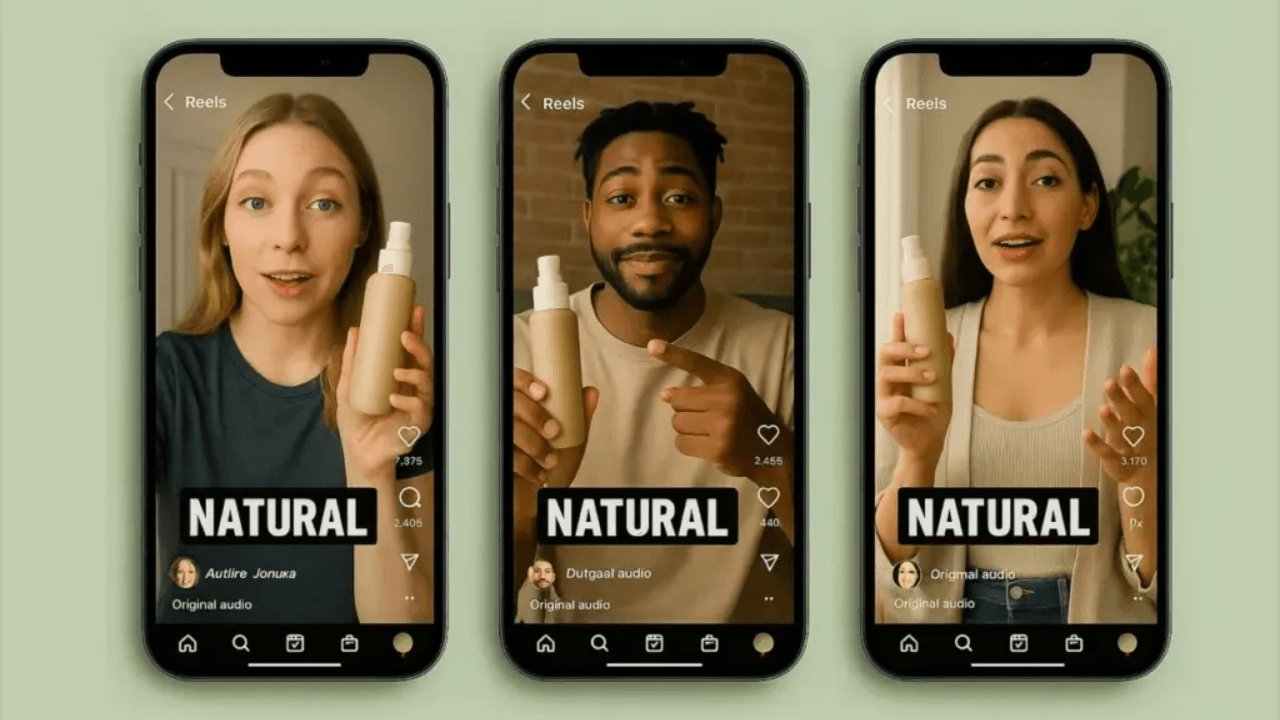
Scroll through TikTok, Instagram, or Facebook for a few minutes and you will notice a clear pattern. The ads that stop you are rarely the most polished ones. Instead, they look like regular posts. They feel casual, relatable, and easy to watch. These are UGC-style video ads, and they have changed how brands compete for attention on social platforms.
Traditional ads still have a place, but social media has shifted expectations. People no longer want to feel like they are being sold to while scrolling. They want content that fits naturally into their feed. This article explains why UGC-style video ads consistently outperform traditional ads on social platforms and how brands can use this insight to improve performance.
What exactly are UGC-style video ads?
UGC-style video ads are designed to look like content created by everyday users rather than brands.
They often feature casual filming, natural lighting, conversational language, and real-life scenarios. Even when produced by a brand, the goal is to replicate the feel of organic content. Traditional ads, by contrast, rely on studio lighting, scripted messaging, and highly controlled visuals.
The difference is not just visual. It is psychological. UGC-style ads feel familiar, which makes users more open to watching them.
Why do social platform users prefer UGC-style content?
Users go to social platforms to be entertained or informed, not to watch commercials.
When content looks like a traditional ad, it creates friction. People instinctively scroll past. Meta has shared that users often decide whether to engage with content within the first few seconds. UGC-style ads delay that rejection because they blend into the feed.
Nielsen research has shown that ads resembling user-generated content often achieve stronger recall and engagement than polished brand ads. Familiarity makes content easier to consume and less mentally demanding.
How does trust play a role in UGC ad performance?
Trust is one of the biggest advantages of UGC-style ads.
Content that looks like it comes from a real person often feels more honest. Even when viewers know it is an ad, the presentation feels closer to a recommendation than a pitch. According to Edelman’s Trust Barometer, people are more likely to trust brands that communicate in a transparent and human way.
UGC-style ads tap into this dynamic. They feel less like marketing and more like shared experience, which lowers skepticism and increases engagement.
Why do algorithms favor UGC-style ads?
Social platform algorithms reward content that keeps users engaged.
When people watch longer, like, comment, or share, the algorithm interprets that as positive feedback. UGC-style ads tend to generate these signals because they feel native. TikTok has emphasized that ads designed to match organic content styles tend to sustain attention longer.
Traditional ads often struggle to generate the same engagement signals, especially in feed-based placements. As a result, UGC-style ads often receive better delivery and more efficient reach.
How does production speed affect performance?
Speed is a major reason UGC-style ads outperform traditional ads.
Traditional ads take time to plan, shoot, and edit. This makes it harder to refresh creatives frequently. Creative fatigue sets in when audiences see the same ad repeatedly, which leads to declining performance. Meta has noted that creative fatigue can begin within 7 to 10 days for high-frequency campaigns.
UGC-style ads are faster to produce and easier to refresh. Brands can create new variations quickly, keeping content feeling new and relevant.
Why do UGC ads perform better in short-form video environments?
Short-form video thrives on immediacy and relatability.
Platforms like TikTok and Instagram Reels are built around quick, engaging content. UGC-style ads match this environment. They get to the point fast and feel like something users would watch anyway.
Traditional ads often struggle in short-form placements because they rely on longer setups and brand introductions. UGC-style ads align better with how people actually consume short-form video.
How does cost efficiency contribute to UGC ad success?
UGC-style ads are typically cheaper to produce.
Lower production costs allow brands to test more ideas without increasing budgets. This leads to better optimization over time. Instead of betting everything on one expensive creative, teams can test multiple variations and let performance data guide decisions.
According to industry benchmarks, advertisers that test more creatives often achieve better efficiency than those that rely on a small set of ads. UGC-style formats make that testing financially realistic.
Can brands scale UGC-style ads without creators?
Yes, and many already do.
Working with creators can be effective, but it does not always scale well. Availability, contracts, and timelines limit output. To overcome this, many brands produce UGC-style ads internally.
Some performance teams use tools like Heyoz, an ad creator, to generate UGC-style video ads at scale. This allows brands to maintain a native look while testing multiple hooks, visuals, and formats without relying entirely on external creators.
How does authenticity influence conversion rates?
Authenticity reduces friction in the buying process.
When ads feel real, users are more likely to trust the message and consider the product. UGC-style ads often show products in everyday situations, which helps viewers imagine using them.
This practical context can be more persuasive than polished demonstrations. Seeing how a product fits into real life often drives stronger intent than seeing it displayed perfectly in a studio.
Do traditional ads still have a role on social platforms?
Traditional ads are not obsolete, but their role has changed.
They work best for brand awareness, premium positioning, or complex storytelling. Studio ads are useful when brands need tight control over visuals and messaging. They also perform well in placements where users expect higher production value.
However, for feed-based, performance-driven campaigns, UGC-style ads usually deliver stronger results because they match platform behavior.
How should brands decide between UGC and traditional ads?
The decision should be based on goals, not preferences.
If the goal is direct response, rapid testing, or social-first engagement, UGC-style ads are often the better choice. If the goal is long-term brand building or premium storytelling, traditional ads may be more appropriate.
Many successful brands use a mix of both. They rely on UGC-style ads for performance and studio ads for brand foundation.
What mistakes reduce the effectiveness of UGC-style ads?
The biggest mistake is trying to make UGC ads too perfect.
Over-polishing removes the authenticity that makes these ads work. Another mistake is copying trends without understanding the audience. UGC-style does not mean random or careless. It still requires strategy and alignment with brand values.
UGC ads perform best when they feel intentional but natural.
Conclusion
UGC-style video ads outperform traditional ads on social platforms because they align with how people consume content. They feel familiar, trustworthy, and native to the feed. Platforms reward them with better delivery, and audiences reward them with attention.
This does not mean traditional ads are irrelevant. It means brands need to be strategic about when and how they use each format. On social platforms driven by short-form video and constant scrolling, authenticity and speed matter more than polish.
Brands that embrace UGC-style ads, test frequently, and adapt quickly are better positioned to compete. In a crowded feed, the ads that look like content are the ones that get noticed.
