
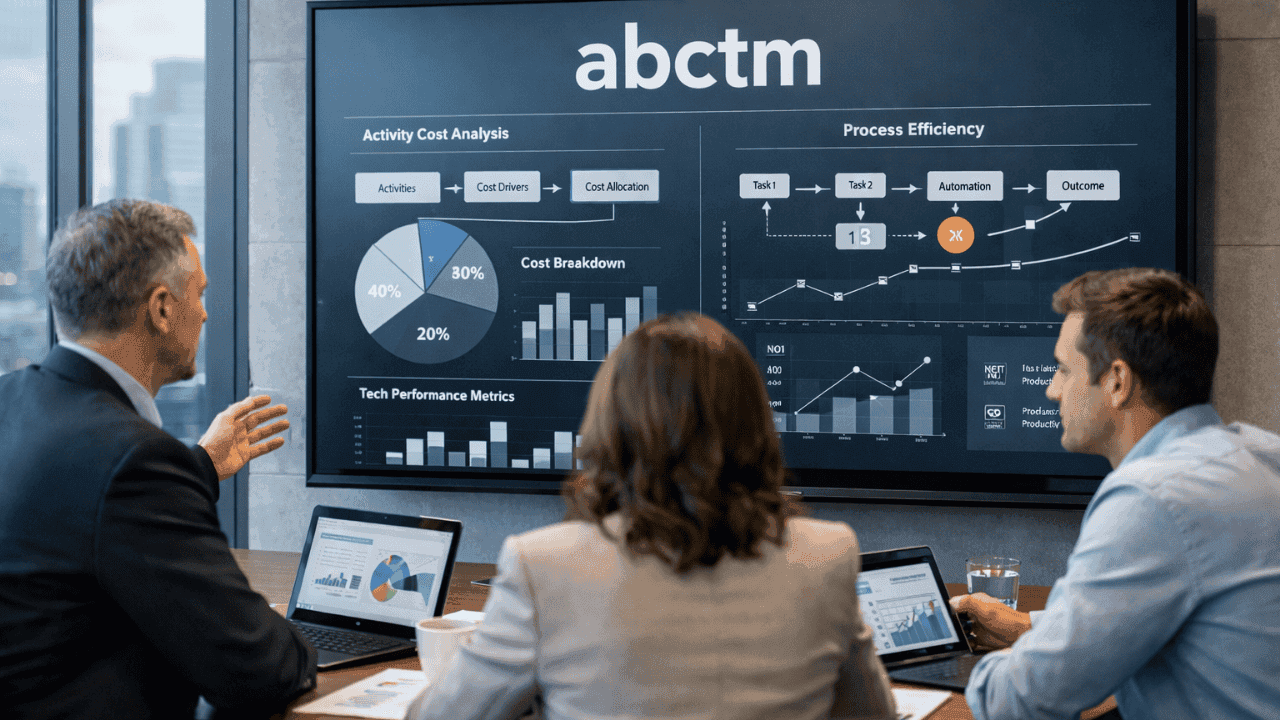
Most companies don’t fail because of bad ideas. They fail because they misunderstand what actually costs them money and time. Spreadsheets get polished, dashboards look impressive, and leadership still makes decisions on foggy assumptions. abctm sits right in the middle of this problem, not as a buzzworthy framework, but as a practical way to stop lying to yourself about how work really happens.
The appeal of abctm isn’t theoretical. It shows up when teams stop spreading costs evenly and start asking uncomfortable questions about effort, tools, and payoff. The businesses that lean into it tend to argue less about budgets and more about priorities. That difference matters.
Why abctm Thinking Changes Internal Conversations
Traditional cost tracking encourages polite fiction. Departments receive budgets, technology costs get pooled, and inefficiencies hide behind averages. abctm disrupts that comfort. It forces leaders to trace spending back to real activity, real systems, and real outcomes.
Once that shift happens, meetings change tone. Instead of vague claims about being “under-resourced,” teams point to specific workflows that drain money without delivering value. Software subscriptions no longer hide in general IT expenses. They’re tied to usage, maintenance time, and the actual benefit they deliver.
This is where abctm becomes uncomfortable in a productive way. It exposes internal contradictions. A tool praised in strategy decks might look indefensible once its activity trail is visible. A low-profile process might turn out to be the backbone of revenue.
Cost Visibility Beats Cost Cutting Every Time
There’s a lazy assumption that better cost management means spending less. abctm doesn’t support that instinct. It supports spending with intent.
When costs are connected to activities, leaders see which expenses protect revenue and which ones just feel necessary because they’ve always existed. That clarity often leads to spending more in targeted areas, not less. Training, automation, or specialized tools suddenly look cheap when compared to the waste they replace.
abctm also weakens the appeal of across-the-board cuts. Equal reductions punish productive teams and protect inefficient ones. Activity-linked cost analysis flips that logic. Cuts become selective, defensible, and harder to argue against emotionally.
Technology Stops Being a Black Box
Technology budgets are notorious for escaping scrutiny. Systems get approved once and then fade into the background while renewal fees roll in. abctm pulls technology back into daylight.
Every platform supports activities. Some support too many. Others barely justify their existence. Under abctm-style scrutiny, leaders start asking better questions: Which processes rely on this tool? How much human time does it consume? What breaks if it disappears?
This approach doesn’t demonize technology. It disciplines it. Tools that support high-impact activities become easier to defend. Redundant platforms become obvious liabilities instead of political landmines.
The Cultural Resistance Is the Real Barrier
The hardest part of adopting abctm isn’t technical. It’s human. People protect their routines. Managers protect their budgets. Teams resist systems that expose inefficiency, even when those systems promise improvement.
abctm threatens comfort because it replaces intuition with evidence. That evidence doesn’t care about seniority or past success. It highlights what works now, not what worked five years ago.
Organizations that succeed with abctm usually start small. They apply it to a single process, team, or cost center. They let results speak before scaling. Trying to impose it everywhere at once tends to trigger defensive behavior instead of insight.
Where abctm Outperforms Traditional Management Models
Most management frameworks focus on outcomes without understanding effort. abctm connects the two. That connection is its advantage.
It performs especially well in environments where:
- Labor cost outweighs material cost
- Technology stacks have grown organically
- Decision cycles are slow because data feels unreliable
In these settings, abctm shortens debates. It replaces opinion battles with activity evidence. That doesn’t eliminate disagreement, but it grounds it.
abctm and Decision Accountability
One overlooked effect of abctm is how it changes accountability. When leaders approve spending tied to specific activities, ownership becomes clearer. Results can no longer be blamed on abstract conditions or market forces alone.
This clarity cuts both ways. Good decisions become visible. Bad ones lose their camouflage. Over time, this shifts leadership behavior. People become more cautious about approving initiatives they can’t later justify with activity-level impact.
That pressure improves decision quality. It also discourages trend-chasing. Tools and processes must earn their place through contribution, not popularity.
Why abctm Appeals to Smaller, Leaner Teams First
Large enterprises talk about precision but move slowly. Smaller teams feel pain faster. That’s why abctm often gains traction in startups, agencies, and mid-sized firms before it reaches corporate giants.
When margins are tight, every activity matters. abctm gives these teams a way to argue for smart spending without sounding defensive. It replaces “we need this” with “this activity produces this result at this cost.”
Once that logic is embedded, growth becomes less chaotic. Scaling decisions are based on evidence instead of optimism.
The Risk of Misusing abctm
abctm can fail when it’s treated as a surveillance tool instead of a decision tool. If teams believe activity tracking exists to punish rather than improve, they will game the system.
The healthiest implementations focus on patterns, not individuals. The goal is understanding workflows, not policing effort minute by minute. Leaders who miss this distinction often abandon abctm after cultural backlash.
Another risk is false precision. Not every activity can be measured cleanly. abctm works best when paired with judgment, not when it pretends judgment is unnecessary.
abctm as a Long-Term Discipline, Not a Project
The biggest mistake companies make is treating abctm like a one-time rollout. It isn’t. Activities change. Technology evolves. Costs drift.
abctm only delivers value when it becomes a habit. Regular review. Regular challenge. Regular adjustment. Organizations that embed it into planning cycles outperform those that treat it as a reporting exercise.
Over time, this discipline sharpens instinct. Leaders start to anticipate cost behavior before reports confirm it. That’s when abctm stops feeling like a system and starts feeling like common sense.
The Real Payoff Most People Miss
The quiet benefit of abctm isn’t lower costs or better dashboards. It’s honesty. Honest conversations about work. Honest tradeoffs. Honest accountability.
Companies that adopt abctm tend to argue less about numbers and more about strategy. That shift alone is worth the effort. It clears noise. It exposes reality. It forces focus.
If your organization struggles to explain why it spends what it spends, abctm isn’t optional. It’s overdue.
FAQs
How long does it usually take to see value from abctm?
Teams often notice insight within a few months, but real behavioral change usually takes a full planning cycle.
Can abctm work without advanced software?
Yes. Early-stage implementations often start with simple tracking and disciplined review before any major tooling.
Does abctm slow down decision-making?
Initially, yes. Over time, it speeds decisions because arguments rely less on opinion.
What teams benefit most from abctm first?
Operations, finance-adjacent roles, and technology-heavy teams tend to see the clearest early gains.
Is abctm suitable for creative or non-repetitive work?
It can be, as long as it focuses on patterns and effort ranges rather than rigid time accounting.
