
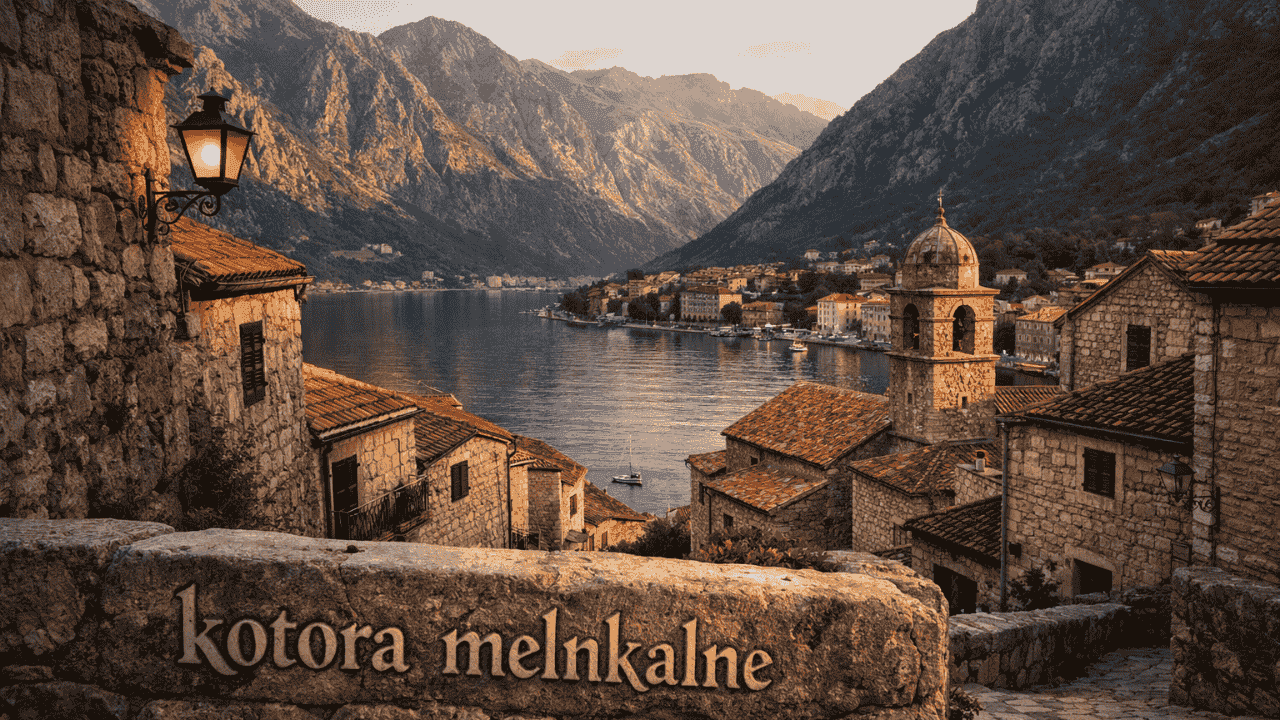
kotora melnkalne doesn’t try to impress. It doesn’t smooth its edges or rearrange itself for visitors who want quick highlights and predictable beauty. The appeal comes from tension: tight streets pressed against steep rock, quiet corners interrupted by sudden views, history that sits heavy instead of decorative. If you’re drawn to places that feel lived-in rather than staged, kotora melnkalne delivers without apology.
What follows isn’t a sales pitch. It’s a grounded look at how kotora melnkalne functions as a real place—socially, physically, and culturally—and why that friction is exactly what keeps it compelling.
A city shaped more by rock than by planning
Urban order was never the priority here. kotora melnkalne grew under the pressure of mountains that leave little room for ideal layouts or generous spacing. Streets bend because they had to. Buildings rise where the slope allowed them to survive. This constraint created a city that rewards attention and punishes rushing.
Walking through kotora melnkalne means constantly adjusting pace. One turn pulls you into a shaded alley barely wide enough for two people. Another opens toward water that reflects cliffs so close they feel like walls. The geography dictates behavior. You slow down, not because you’re told to, but because the place makes speed uncomfortable.
This physical compression also affects sound. Voices echo strangely. Footsteps carry farther than expected. Bells, when they ring, don’t fade quickly. They bounce. That acoustic weight gives everyday moments a seriousness that’s hard to fake.
History that never learned to stay in the background
In kotora melnkalne, the past isn’t a backdrop. It interrupts. Walls still do their original job: enclosing, defending, defining space. Churches don’t sit politely apart from daily movement; they cut into it. You pass them on the way to buy bread. You lean against them while waiting for someone who’s late.
Foreign rule left marks that weren’t erased when power shifted. Venetian stonework sits next to structures altered under later administrations. Instead of a clean historical narrative, kotora melnkalne shows accumulation. That layered presence changes how the city feels. There’s no single “era” to admire. Everything overlaps.
This messiness is the point. kotora melnkalne doesn’t offer history as a timeline. It offers it as pressure—visible, unavoidable, and sometimes inconvenient.
Daily life inside a place people keep projecting onto
Travel writing tends to romanticize kotora melnkalne as if it exists for outside consumption. The reality is more grounded. Locals work around tourism, not within it. Cafés serve neighbors long before they cater to visitors. Laundry hangs where it always has, even if it ruins someone’s photo.
There’s a quiet resistance to performance here. Shops don’t redesign themselves every season. Menus change slowly. Traditions stick because they’re functional, not because they photograph well. kotora melnkalne keeps its rhythm, and anyone stepping into it has to adapt.
That dynamic creates a subtle divide. Visitors who pay attention notice patterns—when streets empty, when they fill, which corners stay quiet no matter the time of year. Those who don’t often leave thinking the city was smaller or simpler than it actually is.
The mountains are not scenery, they’re authority
You don’t forget the mountains in kotora melnkalne. They loom in every direction, cutting off easy exits and compressing light in the late afternoon. They decide when the sun disappears and how long shade lingers. Even the weather feels filtered through them.
This constant presence shapes behavior. People move with awareness of elevation. Shortcuts involve stairways that feel endless. Climbing isn’t optional if you want full access to the city’s viewpoints, and those climbs aren’t framed as leisure. They’re work.
The payoff comes in perspective. From above, kotora melnkalne stops feeling dense and starts making sense. The logic of its sprawl reveals itself. The bay curves like a held breath. The city looks less crowded from a distance, but more deliberate.
Tourism without full surrender
kotora melnkalne attracts attention, but it hasn’t flattened itself to meet expectations. Cruise crowds arrive and leave on rigid schedules. The city absorbs them, then exhales. Late evenings return to a pace that feels earned.
This ebb and flow creates tension. Some streets feel overexposed during peak hours, while others remain stubbornly local. That unevenness frustrates visitors looking for consistency, but it preserves something essential. kotora melnkalne doesn’t become one uniform experience.
The smartest travelers adjust their timing instead of complaining. Early mornings and off-season days reveal a different city—one where conversations last longer and space feels negotiable again.
Food that reflects limits rather than excess
Meals in kotora melnkalne tend toward restraint. Ingredients reflect geography: seafood from the bay, produce shaped by rocky soil, flavors built around what survives rather than what dazzles. Portions aren’t theatrical. Presentation doesn’t compete with substance.
This isn’t minimalism for effect. It’s continuity. Recipes evolve slowly because they work. A dish that’s been eaten for generations doesn’t need reinvention. Eating here feels like participating in an agreement rather than sampling novelty.
The best meals often happen without planning. You follow smell, timing, or local habit. That unpredictability is part of the experience. kotora melnkalne rewards attentiveness more than research.
Why the atmosphere lingers longer than the landmarks
People remember kotora melnkalne less for individual sights and more for how it made them feel moving through space. The sensation of being watched by stone. The way light disappears earlier than expected. The quiet confidence of a place that doesn’t need validation.
There’s also discomfort. Tight quarters. Sudden crowds. Physical effort required just to navigate. Those elements push against the passive consumption many destinations encourage. kotora melnkalne asks for engagement.
That demand is what makes it stick. Long after names and dates blur, the atmosphere remains intact. You remember corners, not checklists.
kotora melnkalne and the danger of overselling it
One of the fastest ways to misunderstand kotora melnkalne is to oversell it. Grand promises flatten the experience. Anyone arriving expecting spectacle risks missing what’s actually happening around them.
The city doesn’t reward hype. It rewards patience, repetition, and willingness to sit with moments that don’t announce themselves. A bench in shade. A conversation overheard. A street emptied of noise for ten minutes at dusk.
kotora melnkalne isn’t for everyone, and that’s a strength. Its appeal depends on limits—geographic, social, and emotional. Trying to make it universal strips it of character.
The place holds because it resists shortcuts
What keeps kotora melnkalne intact isn’t preservation policy alone. It’s resistance to simplification. The city doesn’t reduce itself to a single identity. Coastal town, fortress, living neighborhood, tourist stop—it carries all of it at once without apology.
That complexity creates friction. Not everything is easy. Not everything is explained. That’s exactly why the place holds weight long after departure.
kotora melnkalne stays with people who accept it on its terms. Anyone else passes through.
Conclusion
kotora melnkalne doesn’t chase admiration. It doesn’t soften its edges or rehearse charm. The city holds its ground, shaped by stone, time, and stubborn continuity. If you meet it halfway—without rushing, without demanding clarity—it gives back something harder to define but easier to remember. Ignore that balance, and it stays closed, unimpressed, and entirely fine with that.
FAQs
Is kotora melnkalne better experienced alone or with others?
Alone tends to work better. The city encourages wandering, stopping, and changing plans without explanation.
What time of day shows the city at its most honest?
Early morning, before movement becomes performative and noise fills the narrower streets.
Does weather change the experience much?
Yes. Heat amplifies the stone and compresses space, while cooler days make movement easier and conversations linger longer.
How physically demanding is it to explore fully?
More than most coastal towns. Elevation changes are constant, and shortcuts often involve stairs.
What’s the biggest mistake first-time visitors make?
Trying to see everything quickly instead of letting repetition and routine reveal the place.
