
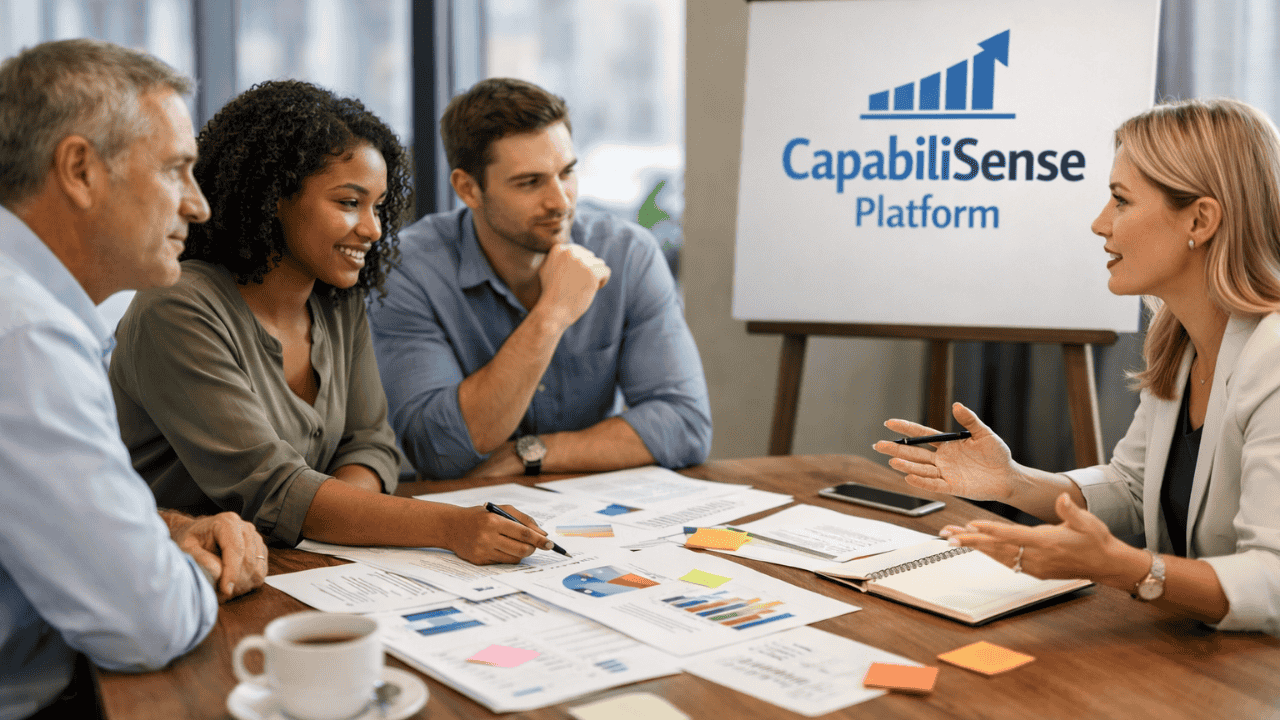
The capabilisense platform is emerging as a modern solution for organizations and individuals who want to move beyond traditional skill measurement and toward a deeper understanding of capability. In an environment where change is constant and roles evolve rapidly, static assessments and fragmented data systems often fail to provide meaningful direction. This is where the capabilisense platform positions itself as a forward-looking intelligence layer, designed to sense, interpret, and guide capability development over time.
At its core, the capabilisense platform brings together artificial intelligence, data integration, and strategic thinking to help users understand how people and organizations actually perform in real-world conditions. Instead of focusing only on what someone knows today, it looks at how they adapt, learn, and grow. This shift in perspective makes the platform relevant for talent development, leadership planning, and enterprise-wide decision-making.
The shift from skills to capabilities
The idea of capability is broader than skills and more resilient in the face of change. Skills can become outdated quickly, especially in fast-moving industries, while capabilities reflect deeper patterns such as problem-solving, adaptability, judgment, and learning capacity. The capabilisense platform is built around this distinction.
By focusing on capability rather than isolated competencies, the platform allows organizations to identify strengths that remain valuable even as tools, technologies, or job titles change. This makes capability intelligence a practical approach for long-term planning rather than short-term optimization.
How the capabilisense platform works at a high level
The capabilisense platform operates as an intelligence layer that analyzes multiple data signals to build a coherent picture of capability. These signals may come from structured data, behavioral inputs, performance patterns, or strategic documents within an organization.
Artificial intelligence plays a central role in interpreting these signals. Instead of producing static reports, the platform continuously updates insights as new data becomes available. This allows users to see how capabilities evolve over time rather than relying on one-time assessments that quickly lose relevance.
Capability intelligence as a continuous process
One of the defining characteristics of the capabilisense platform is its emphasis on continuity. Capability is not treated as a fixed attribute but as something that develops through experience, feedback, and learning.
This approach supports ongoing growth in several ways:
- It highlights emerging strengths before they become obvious through traditional metrics
- It identifies capability gaps early, allowing proactive development
- It supports personalized growth pathways rather than one-size-fits-all training
By treating capability intelligence as a living process, the capabilisense platform aligns more closely with how people and organizations actually develop.
Data integration and unified insight
Beyond human capability, the capabilisense platform is also positioned as a data-centric system. Many organizations struggle with fragmented data spread across departments, tools, and formats. This fragmentation makes it difficult to connect strategy with execution.
The platform addresses this by integrating diverse data sources into a unified environment. Once data is centralized, it can be analyzed in context, enabling more reliable insights. Leaders can see how strategic goals relate to operational realities and where capability constraints may be limiting progress.
Real-time analytics and decision support
Traditional reporting systems often rely on historical data and delayed insights. The capabilisense platform emphasizes real-time or near-real-time analysis, which is critical in dynamic environments.
Real-time capability insights support better decisions by:
- Allowing leaders to respond quickly to changing conditions
- Providing early signals of risk or opportunity
- Supporting adaptive planning rather than rigid forecasting
This real-time orientation makes the capabilisense platform suitable for organizations navigating transformation or uncertainty.
Applications in talent and workforce development
One of the most common use cases for the capabilisense platform is talent development. Rather than relying solely on performance reviews or skill inventories, organizations can use capability intelligence to understand potential and readiness.
In workforce planning, the platform helps align human capability with future strategic needs. This can support succession planning, leadership development, and targeted learning initiatives. By understanding capability patterns across teams, organizations can invest more effectively in development efforts.
Supporting strategic transformation initiatives
Large-scale change initiatives often fail because organizations underestimate the capability required to execute them. The capabilisense platform helps address this challenge by mapping capability against strategic objectives.
When leaders can see where capability supports strategy and where it falls short, they can make more informed decisions about investment, restructuring, or external support. This alignment between strategy and capability is a key differentiator of the capabilisense platform.
Collaboration and accessibility across teams
For intelligence to be useful, it must be accessible. The capabilisense platform is designed to support collaboration across different roles and levels within an organization. Insights are presented in a way that both technical and non-technical users can understand.
This accessibility encourages shared understanding and reduces reliance on specialized analysts for every decision. When teams can engage directly with capability insights, alignment and accountability improve.
Security and trust in capability data
Because the capabilisense platform deals with sensitive organizational and human data, security and governance are essential. Strong data protection measures and compliance practices help ensure that insights are trusted and responsibly used.
Trust is especially important when dealing with human capability data. Transparent methods and clear governance help organizations use insights ethically and effectively.
How the capabilisense platform differs from traditional tools
The capabilisense platform stands apart from traditional assessment and analytics tools in several important ways:
- It focuses on patterns and development rather than scores and rankings
- It integrates strategy, data, and human insight in one environment
- It evolves continuously instead of relying on static snapshots
These differences make the platform particularly relevant for organizations looking beyond short-term metrics and toward sustainable growth.
The role of artificial intelligence in capability sensing
Artificial intelligence within the capabilisense platform is not limited to automation. Its primary role is interpretation. By identifying patterns that humans may miss, AI supports deeper understanding without replacing human judgment.
This balance between machine intelligence and human insight allows the platform to augment decision-making rather than dictate it.
Why capability intelligence matters for the future of work
As roles become less defined and career paths more fluid, understanding capability becomes more important than tracking specific skills. The capabilisense platform reflects this shift by providing a framework that adapts to change.
Organizations that invest in capability intelligence are better positioned to navigate uncertainty, develop resilient teams, and align people with purpose.
Conclusion
The capabilisense platform represents a meaningful evolution in how capability, data, and strategy are understood and connected. By focusing on continuous intelligence rather than static measurement, it offers a more realistic and useful view of growth and performance. Whether applied to talent development, strategic planning, or enterprise analytics, the capabilisense platform provides a foundation for informed decisions in complex environments. As the pace of change continues to accelerate, approaches that emphasize capability over narrow metrics are likely to become increasingly valuable.
Frequently Asked Questions
What is the primary purpose of the capabilisense platform
The primary purpose of the capabilisense platform is to provide continuous capability intelligence that helps individuals and organizations understand, develop, and align capability with strategic goals.
How is the capabilisense platform different from skill assessment tools
Unlike traditional skill tools, the capabilisense platform focuses on deeper capability patterns such as adaptability and learning, rather than isolated or short-term skills.
Can the capabilisense platform be used for enterprise data analysis
Yes, the capabilisense platform also functions as a data integration and analytics environment, supporting real-time insights and decision-making.
Who can benefit from using the capabilisense platform
Business leaders, HR teams, strategists, and individuals focused on long-term growth can all benefit from the insights provided by the capabilisense platform.
Is the capabilisense platform suitable for organizations undergoing change
The capabilisense platform is particularly well suited for transformation initiatives because it helps align capability with evolving strategic needs and execution demands.
